
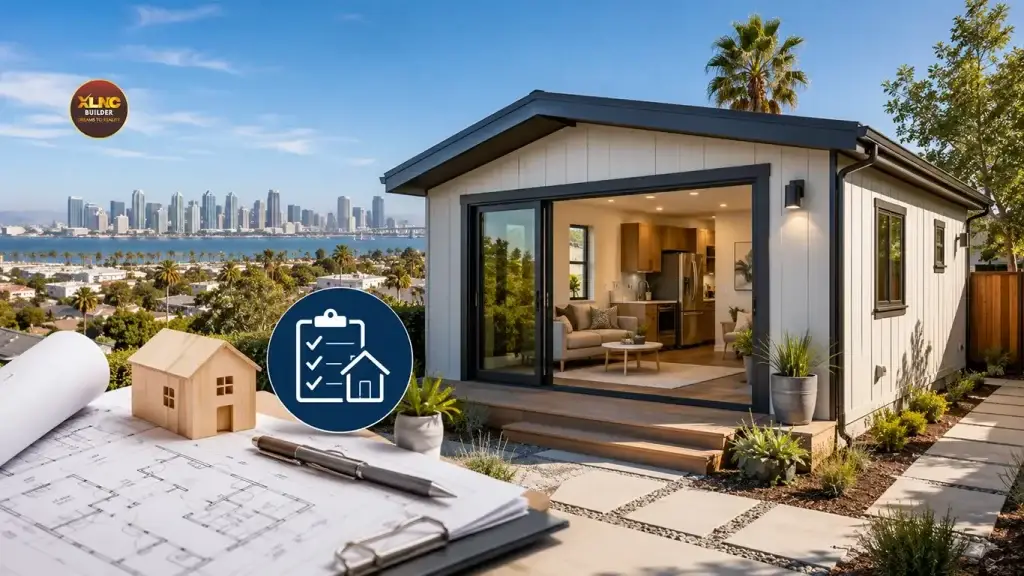
Few investments add as much value to a San Diego home as an accessory dwelling unit (ADU). But before you break ground, it pays to understand the rules because California and San Diego have rewritten them dramatically over the past few years, and 2026 brings a few more refinements. Here's a plain-English guide to the ADU rules that matter most for homeowners this year.
California has pushed hard to make ADUs easier to build, overriding many restrictive local rules in the process. The result is one of the most homeowner-friendly ADU environments in the country. Still, the details (size, setbacks, parking, fees, and timelines) decide what you can actually build on your lot. Let's walk through them.
How Many ADUs Can You Build?
On a single-family lot in San Diego, state law generally allows one ADU plus one Junior ADU (JADU). That means you can add a detached backyard unit and convert part of your existing home into a separate JADU on the same property. Multifamily properties can add even more units under separate rules. San Diego also runs its own ADU Bonus Program, which allows additional ADUs in certain transit-served, eligible areas in exchange for deed-restricting some units as affordable, a program unique to the city and worth exploring if your lot qualifies.
Size Limits
State law stops cities from setting ADU size limits that are too restrictive. In practice for San Diego:
- Detached ADUs can generally be built up to 1,200 square feet.
- Attached ADUs are typically limited to 50% of the primary home's floor area, but you're always allowed at least 800 square feet regardless of that percentage.
- Junior ADUs (JADUs) are capped at 500 square feet and must be created within the walls of the existing home.
Setbacks
New detached ADUs require only a 4-foot setback from the side and rear property lines. If you're converting existing permitted space, such as a garage, no additional setback is required, even if that structure sits closer to the property line than current zoning would normally allow.
Parking Requirements
This is where the rules have loosened the most. San Diego cannot require additional parking for your ADU if the property is within a half-mile walking distance of public transit, which covers most urban and suburban neighborhoods served by MTS. Just as importantly, when you convert a garage into an ADU, the city cannot force you to replace the lost parking spaces.
Owner-Occupancy
The owner-occupancy requirement for ADUs on single-family lots has been suspended, meaning you do not have to live on the property to build or rent out a standard ADU. Note the exception: Junior ADUs still require the owner to live on-site, in either the main home or the JADU.
Height Limits
Cities must allow ADUs of at least 16 feet in height. That rises to 18 feet if the property is near a major transit stop or the primary home is already multistory, and attached ADUs can generally match the height allowed for the main house. This makes two-story and above-garage ADUs feasible on many lots.
Impact Fees
ADUs under 750 square feet are exempt from development impact fees, the city and school-district charges that can otherwise add $10,000 to $25,000 to a project. ADUs of 750 square feet or larger pay fees proportional to the size of the primary home. Keeping a unit just under that threshold is often a smart financial decision.
Approval Timelines
ADU permits in California are ministerial, not discretionary: there's no public hearing and no design-review board deciding whether your project "fits the neighborhood." The city must approve or deny a complete application within 60 days. Submitting complete, accurate plans the first time is the single best way to hit that timeline; incomplete submittals are the most common cause of delay.
"The rules are more favorable than most homeowners realize, but they change often, and the details are where projects succeed or stall. Always confirm current requirements with the City of San Diego before you finalize a design."
XLNC Builder · San Diego ADU Specialists
A Few More Things to Know
- HOAs can't ban ADUs. California law prohibits homeowners' associations from unreasonably prohibiting ADUs on single-family lots.
- Coastal and hillside overlays still apply. If your property falls within the Coastal Zone or a hillside or historic overlay, expect additional review on top of the standard ADU process.
- Utilities. Standard ADUs generally aren't required to install a new separate utility connection, though you can choose to add one for separate metering.
The Bottom Line
The 2026 rules make it easier than ever to add an ADU in San Diego, but the specifics of your lot, overlays, and utility routing determine what's actually possible and what it will cost. Because state and local ADU laws keep evolving, the smartest first step is a conversation with a builder who works within the City of San Diego's process every day.
At XLNC Builder, we handle ADU projects across San Diego from feasibility and permits through the final walkthrough. We'll tell you honestly what your property can support under the current rules and help you get it built. The rules referenced here are general guidance for 2026 and can change; always confirm the specifics with the City of San Diego Development Services Department.
Planning a build or remodel in San Diego?
Get a free, no-pressure consultation and a transparent quote from XLNC Builder: licensed, insured, and local to San Diego.
Get a Free Quote